DIVERSITY OF CHORDATES
| HOME | REPTILIA |
MDOULE 7: CLASS REPTILIA
7.1. Module Objectives
At the end of this module, the learner will be able to:
1.State the characteristics of the class Reptilia.
2.State the Orders of the class Reptilia.
3.Describe the characteristics of the members of the various orders of the class Reptilia.
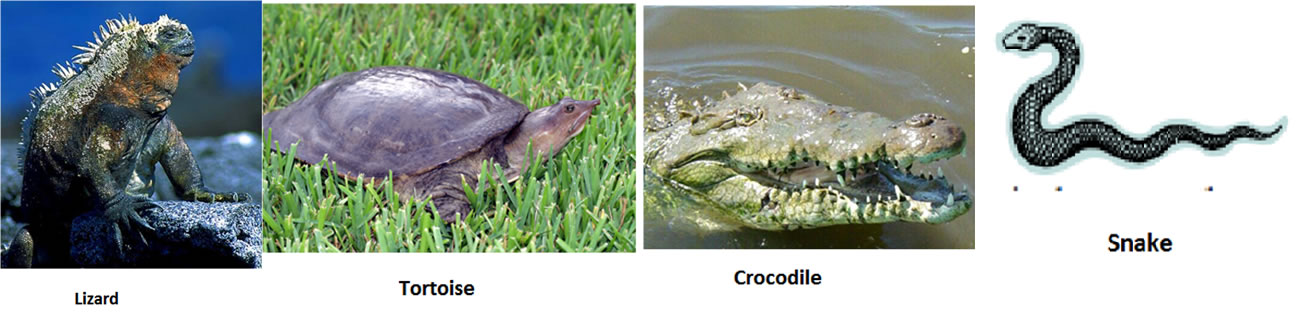
Figure Examples of Reptiles
7.2. Introduction
This class includes the first successful land animals such as lizards, snakes, turtles, and crocodilians. There are over 7000 species. The Reptiles possess several advanced features over amphibians.
7.3. Basic characteristics of Reptilia.
Some of the basic characteristics of Reptilia are:
Reptiles are "cold blooded" or ectoderms (Cannot internally regulate their body temperatures). Reptiles can only regulate their body temperatures behaviorally by basking or swimming.
The body of Reptiles is covered with scales containing keratin. Keratin is a waterproofing protein which prevents water loss in an organism.
Reptiles have claws on toes (if they have toes).
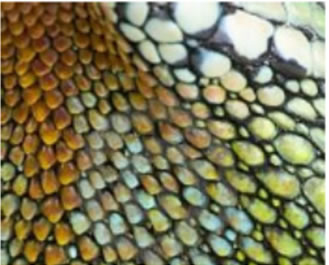
Figure 2 Reptile skin
The blood circulatory system of reptiles comprised of three-chambered hearts, two auricles and a single ventricle. Unlike amphibians, most reptiles have a partial partition in their ventricle that reduces the mixing of oxygen-rich and oxygen-poor blood.
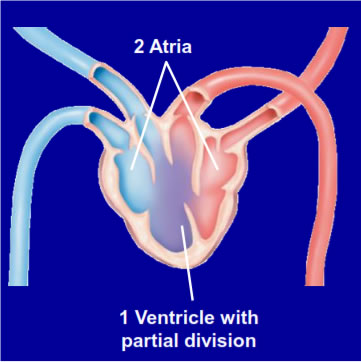
Figure 3 Reptilian Heart
Reptiles uses lungs for respiration. The lungs comprised of small and large sacs similar to the alveoli of the lungs on man. The picture on this slide shows the lungs of a reptile.
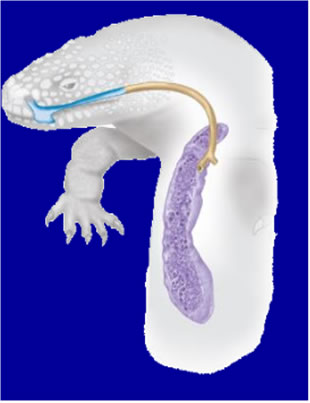
Figure 4 Reptilian lungs
Fertilazation in Reptiles is internal. This helps them to avoid going back to water. They produce shelled eggs after fertilization..Reptiles are the first animals to produce shelled egg, called amniotic egg(amnion, chorion, yolk sac, and allantois membranes). The shell helps in reduction of loss of water from the internal part of the embryo. This feature aided the reptiles to lay their eggs on dry land. The evolution of the amniotic egg, combined with internal fertilization, allows reptiles to reproduce ion dry land.
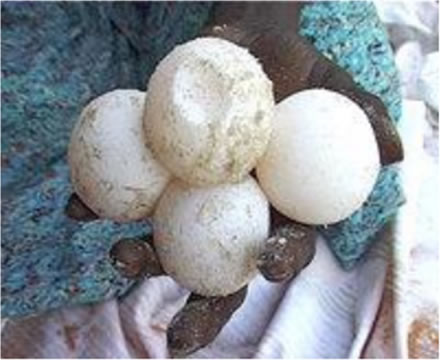
Figure 5 Reptilian Cleidoic/Amniotic egg
7.4. Module summary
You have learnt the following from this module:
1.The reptiles are one of the classes of the Vertebrates
2.Reptiles are the first successful land animals3.Reptiles are covered with scales4.Reptiles lay amniotic eggs. An egg in which the embryo develops5.Reptiles exhibit internal fertilization6.Retiles have strong, respiratory, blood circulatory and coordinating system7.The Reptilia comprised of two orders, Chelonia Squamata
| Amphibia | Aves |
2019 Digital Vision Digital Resources